Showing posts with label Short Stories. Show all posts

Thursday, May 13, 2021

Fiction Review: Astray

Last month on audio, I listened to the short story collection Astray by Emma Donoghue. I loved her novel Room but haven't had a chance to read any of her later novels. I didn't realize this was short stories when I started listening, but I was quickly immersed in this interesting, eclectic collection of stories.

The stories featured in this collection are all very different, with settings in the UK, US, and Canada, with diverse characters and situations. They are all connected by the theme of the book--astray--and Donoghue explains the stories are all about travelers and immigrants, with the book divided into parts: Departures, In Transit, and Arrivals and Aftermaths. In each case, Donoghue took some small nugget of obscure news from real history, spanning from the 1700's to the early 1900's, and built a story around it, fleshing out the characters and filling in fictional details. "Man and Boy," the first story in the collection, is about Jumbo, a famous elephant at the London Zoological Society in the 1800's, and his trainer. Jumbo's been sold to P.T. Barnum but is reluctant to board the crate on the ship bound for America. It's written entirely from the perspective of the trainer, as he talks to Jumbo. "Last Supper at Brown's" is set in 1800's Texas, about an enslaved man who escapes with his master's wife. At the end of the 19th century, two treasure-hunting men barely survive a harsh winter in a tiny cabin during the Klondike Gold Rush in "Snowblind." "The Hunt" is a chilling story of a very young man conscripted as a soldier during the Revolutionary War and how the war changes him. After each story, Donoghue includes an afterword detailing her sources for the bit of news on which she based the story.

Each individual story in this collection is fascinating and immersive, which I sometimes find frustrating in short stories--just as I'm getting into the story, it ends--but not in this case. Somehow, each story was exactly the right length and satisfying. The audio production was very well-done, using multiple narrators, with the Afterwords read by Donoghue herself. I enjoyed every single story, and taken together, they form an intriguing picture of regular people throughout history, sometimes caught in extraordinary circumstances and often reinventing themselves. I can't imagine the research Donoghue must have done to discover these obscure, interesting little bits of news. In an interview, she said that she worked on this collection over the course of 15 years, which makes sense to me. I thoroughly enjoyed this collection of engrossing stories about people who are outsiders, traveling (physically or some other way) to new places for fresh starts.

304 pages, Little, Brown and Company

Disclosure: I received this book from the publisher in return for an honest review. My review is my own opinion and is not influenced by my relationship with the publisher or author.


Note: This post contains affiliate links. Purchases from these links provide a small commission to me (pennies per purchase), to help offset the time I spend writing for this blog, at no extra cost to you.


Visit my YouTube Channel for more bookish fun!


Listen to a sample of the audiobook here, from the first story, "Man and Boy," about Jumbo and his trainer, and/or download it from Audible.


You can buy the book through Bookshop.org, where your purchase will support the indie bookstore of your choice (or all indie bookstores)--the convenience of shopping online while still buying local!


Or you can order Astray from Book Depository, with free shipping worldwide.

Wednesday, May 05, 2021

Fiction Review: Breakfast at Tiffany's

As usual, there was a book included with the goodies in my Easter basket, and this year it was Breakfast at Tiffany's by Truman Capote (the Easter bunny has good taste). I saw the movie adaptation many years ago, but I had never read anything by Capote before. My copy of the book included the novella plus three very different short stories, and I enjoyed them all.

Breakfast at Tiffany's is the story of a young woman named Holly Golightly who lives in New York City in the post-WWII years. The novella is told entirely from the point of view of an unnamed narrator, a man who lives in the apartment above Holly's in a brownstone in the East 70's. The story begins years later, when a joint acquaintance asks the narrator if he's seen Holly lately. The rest of the novella is a flashback to those post-war years and his time spent getting to know Holly, who was largely unknowable. She was a mysterious figure in New York at the time, a stylish, charming young woman who hosts fabulous, loud parties on a shoestring (much to the annoyance of other renters in the building) and who spends her time with older, wealthy men. But Holly's past is a mystery, and the narrator only slowly gets to know the real Holly behind the glitz, glamour, and poise. To say much more would give too much away, as the intrigue in this novel is that gradual reveal of the "real" Holly. 

After the novella, the book included three short stories, each very unique. House of Flowers takes place in Haiti. It's about a young woman named Ottilie who escapes from a life of prostitution in Port-au-Prince to join a man named Royal in his house, covered with flowers, up in the hills. In A Diamond Guitar, an older man named Mr. Schaeffer is well-respected in the rural prison work camp where he spends his life. A young Cuban man shows up at the camp one day with an embellished guitar and gradually bonds with Mr. Schaeffer, trying to convince him to escape with him. The last story, A Christmas Memory, was my favorite. This is the only one I'd heard of before (I think we even have a copy of it among our holiday books) and is said to be autobiographical, about a young boy and his elderly cousin. The two of them are both treated as outcasts in their family but are very close to each other and have wonderful traditions they carry out each Christmas season.

I thoroughly enjoyed both the novella and all of the short stories. Having seen the movie all those years ago, I didn't remember much of the plot but couldn't shake the mental image of Audrey Hepburn as Holly (ironic since the character in the book has blond hair). I can see why Capote is such an acclaimed writer, as this and all of the stories are filled with rich descriptions and dialogue that make you feel as if you are there, whether in NYC in the late 40's or the hills of Haiti or rural Alabama. All of the stories are thoughtful and intriguing, digging deep into their characters. A Christmas Memory is sweet and poignant, and I can see why it's considered a holiday classic. I don't know why it took me so long to discover Capote for myself, but I am looking forward to reading more from him.

178 pages, Vintage International

Note: This post contains affiliate links. Purchases from these links provide a small commission to me (pennies per purchase), to help offset the time I spend writing for this blog, at no extra cost to you.


Visit my YouTube Channel for more bookish fun!


Listen to a sample of the audiobook here and/or download it from Audible. This audio is read by Michael C. Hall, aka Dexter!


You can buy the book through Bookshop.org, where your purchase will support the indie bookstore of your choice (or all indie bookstores)--the convenience of shopping online while still buying local!  


Or you can order Breakfast at Tiffany's from Book Depository, with free shipping worldwide.

Saturday, March 27, 2021

Fiction Review: Whisky for Breakfast

I recently finished a collection of short stories written by a friend of mine, Whisky for Breakfast by Christopher P. Mooney. This was just published at the end of 2020, and I have been looking forward to reading it because he's an excellent writer. 

The topics in these 35 short stories tend to be pretty dark, and they focus on real life, especially the gritty underbelly, with topics including crime, aging, suicide, and more. The collection kicks off with the story of a hard-drinking PI who's helping to investigate the disappearance of a teen girl. That story is sort of typical short-story length, but some of his stories are just a single page, and a few play with ingenious approaches. Characters in this collection are often those whose stories we rarely hear about: criminals, prostitutes, victims of crime, murderers (there is plenty of crime fiction, but the focus is usually on the good guys). One clever, unique story, Con/Sensual, describes an interaction between a prostitute and a john, with both of their thoughts and perceptions provided, side-by-side, down the pages; as you can imagine, their experiences are very different! My favorite story in the collection is Poster Boy, about a young boy who doesn't understand what his parents have been whispering about and finds out during a very embarrassing visit to the school nurse's office for something else. Like the other stories, this one delves into dark subject matter, but I liked the child's perspective and the sense of humor (even laughter) that offset the solemn topic.

Even with the shortest stories, Chris has a real talent for developing characters, and his writing--with lots of dialogue--paints a detailed picture of the setting and situation, even in a short amount of time. My personal tendency is to enjoy the longer stories best. I hate to leave a character just as I'm getting to know him or her! A few of the stories were a bit too dark for me, personally, especially the couple to do with children (other than Poster Boy), but overall, I enjoyed reading the collection. The stories are smart, thought-provoking, and engrossing, and I can't wait to see what Chris writes next.

168 pages, Bridge House 

Disclosure: I purchased this book myself. My review is my own opinion and is not influenced by my relationship with the publisher or author.


Note: This post contains affiliate links. Purchases from these links provide a small commission to me (pennies per purchase), to help offset the time I spend writing for this blog, at no extra cost to you.


Whisky for Breakfast is available from Amazon in paperback and on Kindle.


You can also buy the book through Bookshop.org, where your purchase will support the indie bookstore of your choice (or all indie bookstores)--the convenience of shopping online while still buying local:


Or you can order Whisky for Breakfast from Book Depository, with free shipping worldwide.


Wednesday, February 03, 2021

Fiction Review: Not the End of the World

One of my favorite books of all time is Life After Life by Kate Atkinson, so last Christmas, my son gave me a volume of her short stories, Not the End of the World, as a gift. I started out just dipping in and out, reading one story at a time here and there, but I found I enjoyed the book far more when I committed to reading it straight through, usually reading one story each day. I really loved this collection of unique, clever, strange stories that mix real-life and elements of fantasy.


Atkinson is known for thoughtful books populated by in-depth characters, with bits of whimsy woven throughout, and this collection of stories highlights her range. Most are set firmly in the real world, some with a strong fantastical element, some with a small magical twist, and some entirely real-world. In Charlene and Trudi Go Shopping, some unnamed apocalyptic event is happening in London in the background, while the two young women in the title attempt to go about their normal lives, chatting about silly luxuries and shopping with a comical ignoring of the real-world crisis occurring. Those two reappear in the last story, Pleasureland, as conditions have continued to worsen and their ability to pretend otherwise is fading. Evil Doppelgängers features a young man named Fielding who works in a newspaper office and starts missing whole days in his memory, as he suspects he has a double who is having much more fun than he is. Heidi takes in a stray tomcat in The Cat Lover, never suspecting what will happen in the weeks to follow or how her life will change. In Dissonance, a single mother and her two ungrateful teens live solitary lives in the same household (and frequently think unkind thoughts of each other), until a horrible accident jars the daughter out of her complacency. A young boy named Arthur is left entirely in the care of his nanny, Missy, as his rockstar father and Romney, his celebrity-obsessed mother, ignore him. The pair get closer and closer as they spend more time together until ... oh, I don't want to ruin it.


These stories are each unique, thought-provoking, immersive, and surprising, with Atkinson's accomplished writing and sense of humor. Once I began reading the stories one after the other, I realized there were connections between them--characters who appear in multiple stories (Romney is often mentioned), events or places that are referenced multiple times--so that it is clear these stories all take place in the same world. While I'm not a big fan of straight-up fantasy, I loved these stories which all take place in the real world, though sometimes with small (or large) fantastical elements popping up in surprising places. I laughed a lot and always looked forward to reading the next story. This wholly original, amusing, unpredictable collection left me satisfied and thinking, "Why don't I read short stories more often?"


244 pages, Little, Brown and Company


NOTE: The writing, tone, and fantasy elements in this book reminded me of another short story collection I thoroughly enjoyed, Get in Trouble by Kelly Link.


Note: This post contains affiliate links. Purchases from these links provide a small commission to me (pennies per purchase), to help offset the time I spend writing for this blog, at no extra cost to you.


You can buy the book through Bookshop.org, where your purchase will support the indie bookstore of your choice (or all indie bookstores)--the convenience of shopping online while still buying local!


Or you can order Not the End of the World from Book Depository, with free shipping worldwide.


Wednesday, February 21, 2018

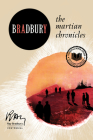
Fiction Review: The Martian Chronicles

I discovered Ray Bradbury when I was in high school and quickly devoured every one of his books in our public library! That was...uh...let's just say a long time ago, and while I remember the joy his books brought me, I don't remember many details from his novels and short stories. I reread Fahrenheit 451 a few years ago for Banned Book Week and wanted to revisit more of my old favorites. I picked up a copy of The Martian Chronicles, Bradbury's 1950 collection of interrelated stories about humans traveling to and settling on Mars, at the bookstore last fall and thoroughly enjoyed reading it and rediscovering Bradbury's clever and creative storytelling.

In his introduction, Bradbury describes The Martian Chronicles as a book-of-stories-pretending-to-be-a-novel, but I quickly got into the flow of his storytelling. Though some of the stories were published as stand-alones at one time or another, they are collected here in chronological order so that they tell the story of man exploring and trying to settle Mars, from January 2030 to October 2057. Little attention is paid to the technology - these are stories about people (and Martians). Each story has its own characters, and sometimes certain characters reappear in later stories, but this is mostly a sequence of individual tales that link together to tell a complete story of man's efforts to take over another world, with our typical disregard for those already living there. In fact, since it was written in the 1940's, some of the technology, characters, and their actions seem quite old-fashioned. It's a novel about human nature, though, which doesn't change much.

I was absorbed by the characters and their world immediately. Bradbury is very creative in his imaginings of this foreign world, describing places, topography, and cities - and even more so in his descriptions of the existing citizens of Mars. Some are somewhat human-like and some are entirely different kinds of beings. The invaders from Earth, though, are always, predictably very human. I had forgotten what a wonderful sense of humor Bradbury has! I often laughed out loud or appreciated a subtlety in the storyline. I was thrilled to rediscover what I loved so much about Bradbury's writing as a teenager - it is clever, thoughtful, and very entertaining.

268 pages, William Morrow (HarperPerennial)


Disclosure: I purchased this book myself. My review is my own opinion.

Note: This post contains affiliate links. Purchases from these links provide a small commission to me (pennies per purchase), to help offset the time I spend writing for this blog, at no extra cost to you.

Order The Martian Chronicles from an indie bookstore:
Support Independent Bookstores - Visit IndieBound.org

Or order The Martian Chronicles from The Book Depository, with free shipping worldwide.

Friday, October 20, 2017

Fiction Review: Machine Learning

If you read my blog this summer, you know that my husband and I are HUGE fans of Hugh Howey's Silo series: Wool, Shift, and Dust. That trilogy is a completely unique post-apocalyptic, dystopian story with suspense, an intriguing setting, and in-depth characters you come to care about. I finished it this summer for my Big Book Summer Challenge, and both my husband and I loved it. We first read book 1, Wool, because multiple friends of ours from all over the country kept telling us, "You HAVE to read this book!" They were right.

So, I was beyond thrilled to see a new collection of short stories by Hugh Howey among my choices to review for Shelf Awareness and even more thrilled when I was assigned it. I was right to get so excited. Machine Learning is an eclectic mix of compelling and thoughtful stories, from 3 to 40 pages long, in a wide array of genres.

I enjoyed every single story in the collection, but some were truly mind-blowing. Howey has a way of taking common tropes and turning them on their heads, looking at familiar storylines from a completely new perspective. He covers topics as diverse as artificial intelligence, alien invasions, Old West stories, and myths and folklore. He even includes 3 Silo stories for those who didn't get enough of the characters in the 3 long books (like me!) - but I recommend you read the Silo trilogy before the Silo short stories because there are some spoilers there, and they just make more sense if you are familiar with the world.

You can read my full review of Machine Learning at Shelf Awareness, which includes examples of some of the stories in the collection.

Have you read any Hugh Howey novels or short stories yet? Are you a mega fan like we are?


I received this book from the publisher in return for an honest review. My review is my own opinion and is not influenced by my relationship with the publisher or author.

Note: This post contains affiliate links. Purchases from these links provide a small commission to me (pennies per purchase), to help offset the time I spend writing for this blog, at no extra cost to you.

Listen to a sample of the audiobook here and/or download it from Audible.


You can buy the book through Bookshop.org, where your purchase will support the indie bookstore of your choice (or all indie bookstores)--the convenience of shopping online while still buying local!


Thursday, July 06, 2017

Fiction Review: The World to Come

-->
I don’t read a lot of short story collections, but Booktopia is always a good motivator for me to try one, as it was in 2015 with Kelly Link’s wonderful collection, Get inTrouble. Booktopia 2017 was no exception, and I recently finished reading The World to Come, a collection of historical fiction short stories written by Booktopia guest Jim Shepard.

This is an unusual collection of short stories in that most of them focus on real-life disasters, many of them little known. From an enormous volcanic eruption in 1600 BC to a destructive modern-day train derailment of oil tankers, there are all sorts of disasters covered in these stories, based on real-life events. In each case, the author focuses in on one fictional character at the center of the event, delving into his or her thoughts, feelings, and actions. A couple of the stories focus more on intimate situations, perhaps tragic to single person but not historical disasters.

Each story is intricate, moving, and very personal, even if it is based on a catastrophe that affected thousands of people. The magnifying glass is held up to a single person’s state of mind, as a way of looking at the larger event. One thing’s for certain: there are no happy endings here.

One of the stories that was the most shattering to me was HMS Terror, about the ships that were a part of the ill-fated attempt to find the Northwest Passage in the Canadian Arctic in 1845, led by Sir John Franklin. In real-life, the wrecks of these ice-bound ships were only just recently discovered, so deeply buried were the abandoned vessels. Evidence of its crew was just discovered in the region in the 1980’s and 90’s. The story takes place at the time of the expedition, with the crews of the ships confident of the success of their mission. Shepard’s story is told through the diary entries of one man, Lieutenant Edward Little, who documents the doomed expedition in his personal journal. You know from the beginning things won’t end well, but the details and manner of his and his crewmate’s demise is still shattering, though filled with suspense and tension.

In the title story, a pioneer housewife in rural New York lives an isolated existence with her taciturn husband. She has endured unspeakable loss, and her loneliness and seclusion are broken only on Sunday afternoons, when a neighbor, Tallie, makes the trek over to her farm. The two bond over long talks in the warm kitchen. This story is also told through diary entries from the narrator because, as she explains, about their farm ledgers:
“But there is no record in these dull and simple pages of the most passionate circumstances of our seasons past, no record of our emotions or fears, our greatest joys or most piercing sorrows.”

The women’s happiness is short-lived, though, when Tallie’s husband takes her away and tragedy occurs.

Another story in the collection that packed a big emotional punch for me was Telemachus, about the HMS Telemachus, a British Royal Navy submarine in the waters of the Pacific in 1944. A gunner’s mate, bunking among the torpedoes with his colleagues, tells the story of the sub’s long ordeal, spending endless months hiding deep in the water, staying out of view of the enemy while also trying to sneak up on enemy ships to sink them. His account is gritty and real, with gruesome descriptions of the moldy clothes that resulted from the constant moisture, the carbon-dioxide-filled air, and the tinned mutton they survived on.

Each of the ten stories in this collection, whether two or 35 pages long, presents a close-up view of a single person in the face of colossal challenges or tragedies, delving into the background, dreams, and thoughts of that person. Despite this common thread, each story is completely unique and engrossing, peopled by relatable characters that seem like ordinary folks, stuck in extraordinary circumstances. Each of them presents a human perspective that we rarely get when we hear of disasters, big and small, in the news. After reading each story, I was driven to look up the historical details online (when I could find them) to learn more. Although the subject matter carries a feeling of dread (I might have preferred to read the stories separately rather than one after the other), each story provided its own riveting, moving portrayal of humanity.

258 pages, Alfred A. Knopf

The World to Come: Stories
by Jim ShepardHardcover
Powells.com

 Or purchase from Northshire Bookstore, host of Booktopia:


Or purchase The World to Come from Book Depository.

Thursday, November 17, 2016

Fiction Review: Tales of Mystery


I’ve been trying to read more classics this year, though I got a very late start to my 2016 Classics Challenge. For October, I chose one to fit the season: Tales of Mystery by Edgar Allen Poe. This slim paperback (shown in the photo here) is so old and tattered that its cover price was originally 50 cents, and my husband bought it in a used bookstore in high school for just a dime! I thoroughly enjoyed this creepy and varied selection of short stories by the master of the macabre.

This particular collection includes eight of Poe’s better-known short stories:
·      The Tell-Tale Heart
·      The Cask of Amontillado
·      The Black Cat
·      The Masque of the Red Death
·      The Fall of the House of Usher
·      The Murders in the Rue Morgue
·      The Purloined Letter
·      The Pit and the Pendulum

I probably read all of these short stories many years ago, when I was a teenager, because I used to have a large compendium of Poe’s work. A few of the stories were vaguely familiar to me, but I didn’t remember details from any of them, so I experienced them anew with this reading. Almost all of them involve death and/or murder, and many of the stories feature supernatural phenomena, so these were perfect reading for the last week in October!

Of course, I remembered the basic storyline of The Tell-Tale Heart, but it still surprised me in its brevity (just 6 pages) – in my mind, I remembered the story carrying on for much longer (possibly through some re-tellings). Even knowing what is coming in that story, it was still suspenseful and compelling. The Black Cat didn’t sound familiar to me, but when I got to the end, I did recall its strange and spooky climax.

I think I was most intrigued by The Murders in the Rue Morgue and The Purloined Letter, two stories in a series that feature an amateur detective and his friend assisting the police in solving crimes in Paris. I hadn’t remembered that Poe had written such classic mysteries that very much have an air of Sherlock Holmes about them (and their brilliant, keen observer protagonist). In fact, I found out that Poe is considered the inventor of detective stories, and Arthur Conan Doyle’s famous fictional detective came along well after Poe’s death. The first of these stories is a classic closed-room mystery, with a twist I never expected. I was further surprised by the sense of humor these stories display and enjoyed them both very much.

Poe is an engaging writer, pulling the reader into the story, whether it is brief or longer, and not letting go until the usually surprising ending. Although written over 200 years ago, the language does not feel outdated or difficult. I was surprised that many of the stories were set in Europe, since I knew Poe was an American writer (I live near Baltimore, where he is a much-celebrated former resident). I enjoyed this chance to get reacquainted with the famed writer of mystery and suspense and found his eerie, unnerving stories perfect for this spooky season.

143 pages, Award Books, Inc.

(This particular book I read is long out of print, so I have included a similar collection of Poe's short stories in the Amazon link below)


Sunday, July 10, 2016

Fiction Review: The Metamorphosis


I signed up for the 2016 Classics Challenge this year, with the goal to read a classic every month. Suddenly, it was June, and I had not yet read a single classic! June was already filled with reading obligations for book groups and reviews, but I was determined to fit one in. I chose the shortest classic on our bookshelves, The Metamorphosis by Frank Kafka, a novel that both our sons had read in their senior year of high school World Lit class. They’d both enjoyed it (even the one who says he doesn’t like to read), and I’ve never read Kafka before. I found this short novella surprisingly engrossing, clever, and even funny.

Hearing about the plot of The Metamorphosis before (a man turns into an insect), I’d always imagined some sort of lengthy, grotesque change process that took most of the novel to complete. Nope. In the first sentence of the first page, it simply says, “When Gregor Samsa woke up one morning from unsettling dreams, he found himself changed in his bed into a monstrous vermin.” That’s it. Metamorphosis complete.

The interesting part isn’t the change itself (which is never explained) but what happens next. The author simply imagines, “what would happen if one day you woke up and were a giant bug?” (some experts say Gregor turns into a cockroach; others say the translation implies a bedbug; some say just a general beetle). It’s an interesting line of thinking. First, Gregor must himself realize what has happened and get used to his new body. He can scamper across the walls and ceiling but can’t open his bedroom door. He is understandably worried about being late to work that first morning (cue tongue-in-cheek humor).

Soon, Gregor must also deal with the reactions of his family members. A young man working as a salesman, he lives with his mother and father and sister. First concerned that Gregor is unwell because he hasn’t gotten up yet, they soon discover what has happened and then vacillate between concern and disgust. Interestingly, no one really wonders how this bizarre thing happened. Soon, their worries grow because Gregor was the main breadwinner in the household. His retired father must return to work, his mother and sister take in sewing.

Through all this family drama, Gregor is still a giant bug and must deal with the problems of daily existence. His sister thoughtfully leaves food out for him on the floor of his room, but he doesn’t find that kind of food very appealing. His room becomes filthy because no one wants to come in and clean it. He loses his job quite quickly after a visit from his boss that first day. Gregor simultaneously worries about the effects of his strange predicament on his family, as well as the practical concerns of learning how to live as a giant bug in his bedroom.

I think you can see, even from this brief synopsis, that the absurdity of the situation – and the very straightforward way both the author and the main character consider it – lends itself to humor. To this mix, Kafka adds his dry, witty way of describing scenes that are completely fantastical in perfectly normal tones. It’s not just a comedy, however. It’s a tragedy as well, as Gregor adjusts to his new life and realizes he’s probably not ever going back to his old form. In this way, Kafka somehow manages to explore human emotions (both in Gregor and in the responses of those around him) through the guise of a giant insect. I found the combination both thoughtful and a lot of fun to read, and I thoroughly enjoyed this wholly unique story told in such a calm, even way. The Metamorphosis was a pleasant surprise for me, thoroughly entertaining and compelling. At less than 60 pages, I bet you have time to read this classic novella, too!

55 pages, Bantam Classics

Friday, September 11, 2015

Fiction Review: The Storied Life of A.J. Fikry


Back in January, I gave one of my friends The Storied Life of A.J. Fikry by Gabrielle Zevin for her birthday because I’d heard it was an uplifting novel about books. I finally got a chance to read it myself last month when my husband gave me my own copy for my birthday. I absolutely loved this warm, moving, funny novel that is full of literary references.

A.J. Fikry is the grumpy owner of a bookstore on tiny Alice Island, off the coast of Massachusetts. Although A.J. loves books and reading, his wife, Nic, was the enthusiastic salesperson, and now that she is gone, he lives alone over the struggling bookstore. As the novel opens, a new publishing sales rep named Amelia is on her way to visit A.J. and Island Books; her predecessor warned her about A.J.’s particular tastes and demeanor. In her brief meeting with A.J., his dismissive manner is true to form.

That evening, as with most others, A.J. closes the bookstore, goes upstairs, and drowns his sorrows in a bottle of wine and a frozen dinner, sharing the table with his most prized possession, a rare volume of early Poe poems. In the morning, the mess is cleaned up, and his rare book is missing, so A.J. hurries to the police station in the first of many hilarious scenes in this novel. Soon after, something unexpected is left in the bookstore, something that changes A.J.’s life forever.

I won’t describe more of the plot because half the fun of this novel is its unexpected twists and turns. Main characters besides A.J. and Amelia include the local police chief Lambiase, who enjoys reading detective novels, and A.J.’s sister-in-law, Ismay, and her husband, Daniel, who writes novels. As A.J.’s life changes, so does the bookstore, and the whole community with it.

Each chapter opens with a brief synopsis of a short story, apparently a collection of A.J.’s favorites, with reasons why he likes them, though it isn’t clear at first to whom he is writing these missives. In addition, books, reading, and literary references are woven throughout the book, in the bookstore’s business, A.J.’s reading, the books Amelia represents, and Lambiase’s evolving tastes, as A.J. recommends books to him.

Overall, this is a warm, uplifting, clever novel about opening up to all that life has to offer, about serendipity, and about books and love. And it is funny – often laugh-out-loud, hilariously funny. My husband kept looking at me curiously as I read in bed at night, saying he had never heard me laugh so much while reading! It also includes some sadness, as does life, but overall it’s a fun, joyful ride that I never wanted to end – one of those books that you finish reading and just hold to your chest and sigh. I loved every moment of it (and now I want to read all of the short stories A.J. recommended!).

258 pages, Algonquin Books
 
HighBridge
 

Note: This post contains affiliate links. Purchases from these links provide a small commission to me (pennies per purchase), to help offset the time I spend writing for this blog, at no extra cost to you.


Listen to a sample of the audiobook here and/ordownload it from Audible.


Or get this audiobook from Libro.fm and support local bookstores (audio sample here, too).


Print and e-book from Amazon.


You can buy the book through Bookshop.org, where your purchase will support the indie bookstore of your choice (or all indie bookstores)--the convenience of shopping online while still buying local!