Showing posts with label True crime. Show all posts

Wednesday, June 07, 2023

YA Nonfiction Review: The 57 Bus

A good friend of mine from high school who now teaches high school English recommended I read The 57 Bus by Dashka Slater when it was first released in 2017. Now I realize why she was so enthusiastic about this unique, eye-opening book. It details the true story of how the lives of two teens intersected for a few minutes on a city bus that changed both of their lives.

Sasha is an agender white teen living in Oakland, CA. They attend a small, private school that is very supportive of teens like them who don't fit it into the neat boxes society tends to place people in. Sasha's parents are also very supportive of their choices, having watched their development from a child to an older teen and seen how thoughtfully those choices were made, based on deep feelings. Sasha has plenty of friends who are self-described nerds, and their school fosters creativity, like the silly card game they've invented together. Sasha has a unique sense of style, often wearing a vest and bow tie with a ballerina skirt to school. She rides the 57 bus home.

Richard also rides the 57 bus home from his large public school in Oakland. Richard is Black with a single mother. He and his mom are close, and Richard is generally a good kid, with the kind of humor and goofiness present in many teen boys. Given where he lives and goes to school, though, he's been exposed to a lot more violence and drug use and other societal issues than Sasha, though he generally stays out of trouble. One day on the bus, spurred on by other acquaintances nearby, Richard flicks a lighter someone handed him to Sasha's skirt. To his surprise, it quickly goes up in flames, and Sasha is severely injured. Sasha spends months in the hospital recovering, while Richard heads to juvie and begins his journey through the judicial system. Because the police who interview him for hours without an adult present pressure him to say he's homophobic, he's charged with two hate crimes and faces life in prison.

In an instant, these two teens' lives were changed, and it is easy to simply identify one as the victim and the other as the bad guy. But author Slater helps the reader understand the intricate nuances of this tragic story, taking us deep inside both teens' lives and relationships with friends and family. This book also takes a close look at the failings of our judicial system. One thoughtless moment of goofing around became a life-changing moment for both teens, and this award-winning book that delves into issues of race, class, and gender makes us think deeply about the incident and its aftermath. It's a book that should be required reading for adults as well as teens, and it was excellent on audio.

320 pages, Farrar, Straus and Giroux

Recorded Books

I got this book from Sync several years ago, which offers two free audio books each week during the summer.

This book fits in the following 2023 Reading Challenges:


Nonfiction Reader Challenge - Crime and Punishment

Diversity Challenge


Note: This post contains affiliate links. Purchases from these links provide a small commission to me (pennies per purchase), to help offset the time I spend writing for this blog, at no extra cost to you.


Visit my YouTube Channel for more bookish fun!


Listen to a sample of the audiobook here and/or download it from Audible.


Or get this audiobook from Libro.fm and support local bookstores.


You can buy the book through Bookshop.org, where your purchase will support the indie bookstore of your choice (or all indie bookstores)--the convenience of shopping online while still buying local!


Friday, February 04, 2022

Nonfiction Review: Bottle of Lies

Forget Stephen King. In Bottle of Lies: The Inside Story of the Generic Drug Boom, author and investigative journalist Katherine Eban writes about real-life horror scarier than any of King's novels! As sometimes happens, my book group chose this book that I wasn't interested in reading, and as almost always happens, I ended up being glad I'd read it! This engrossing, terrifying nonfiction book opens the door to the generic drug industry's dirty secrets.

Eban begins by taking an up-close look at one of the worst actors in the generic drug industry, Ranbaxy, an Indian company that is, thankfully, no longer in business. She details how the family-run company started and zeroes in on the personal and professional lives of some of the key players. This company was crooked in horrifying, shocking ways, from the top down. Top management willfully and knowingly manufactured medicines with no quality control, completely making up the data to get their drugs approved by the FDA and providing fraudulent data during their rare FDA inspections. One reason she spends so much time focusing on Ranbaxy is because what they did is not unusual in the generic drug industry. Many other companies, especially in India and China, commit similar frauds--making up their data to get approved, hiding test data that shows contaminants or lesser effectiveness, getting their active ingredients from shady companies not in their official records, and more--and they continue to do so. One of the main characters in the book is Dinesh Thakur, an Indian scientist who became an American citizen and worked at Bristol-Myers Squibb in New Jersey, where he witnessed what highly-regulated, conscientious pharmaceutical research and manufacturing looks like. A friend of his, also from India, convinced him to transfer to Ranbaxy, where he and his new wife could be near their families in India and be part of the up-and-coming Indian pharmaceutical industry. Thakur was a good man with a strong moral character, and he could not be a part of what he eventually realized was going on at Ranbaxy. So, he became a whistleblower, which in India often gets you killed, and finally found someone at the FDA who would listen to him. Stunningly, despite all the hard evidence Thakur provided, it took the FDA ten years to finally make Ranbaxy pay--and even then, it was far less consequences than they deserved. From there, the author moves onto other examples and other companies, as well as American doctors and patients discovering their generic drugs didn't work as well as the brand name drugs, though again, no one would listen to them at first. She delves into the inner workings of the FDA and why politics often guides their decisions on approving drugs. Unfortunately, the book does not end on a hopeful note--many of the issues described are still going on.

This book was so disturbing and shocking to me. First, I rely on about 15 different generic medications to help manage my chronic illness. When I finished this book, my husband and I both raced to our laptops to try to figure out where our meds are manufactured (not an easy thing to find out) and whether any of the sketchier companies in the book were involved. Also, I used to do audits similar to those that the FDA inspectors do, though not in the pharmaceutical business. I worked in Quality Management Systems (QMS), and the FDA's Good Manufacturing Practices (which many of these companies are making a joke of) are a type of QMS. The thought of a company I was auditing just completely making up their data and records is unthinkable. It is certainly a fascinating book, but in a "can't look away from the car crash" kind of way. I kept interrupting my husband's reading to tell him horrifying facts. As much as the information terrified me, I had no trouble at all reading the whole book (and fairly quickly). The book is very well-written. because the author focuses on the people involved and tells an immersive, engrossing story that sometimes reads like a legal thriller. Unfortunately, this is a thriller where most of the bad guys got away with their crimes. I will never look at a bottle of generic medication the same again. 

461 pages (though the text ends on page 410; the rest is reference material), Ecco

Reading Challenges:

B in the Alphabet Soup Challenge

Nonfiction Reader Challenge (2 in January - a record for me!) - fit into the category of popular science

Diversity Challenge

India in the Travel the World in Books Challenge

Maryland for the Literary Escapes Challenge

Note: This post contains affiliate links. Purchases from these links provide a small commission to me (pennies per purchase), to help offset the time I spend writing for this blog, at no extra cost to you.

Visit my YouTube Channel for more bookish fun!


Listen to a sample of the audiobook here, narrated by the author, and/or download it from Audible.


You can buy the book through Bookshop.org, where your purchase will support the indie bookstore of your choice (or all indie bookstores)--the convenience of shopping online while still buying local!


Or you can order Bottle of Lies from Book Depository, with free shipping worldwide.

Thursday, December 09, 2021

Nonfiction Review: I'll Be Gone in the Dark

For my birthday this summer, my son's girlfriend gave me I'll Be Gone in the Dark: One Woman's Obsessive Search for the Golden State Killer by Michelle McNamara. She loves true crime and knew of this story--and she knows I love to read! This was a perfect choice for Nonfiction November, and it kept me riveted from start to finish.

The author combines true crime writing with memoir. The prologue describes her own growing obsession with this case, as she researches deep into the night from her daughter's playroom. It's easy to see how she became so fixated on this case. Starting in the 1970's, there was a string of unusual and brutal rapes in the Sacramento area. After creating widespread panic in the community (and too much attention), the perpetrator moved onto other areas and eventually, in the 80's, escalated to murder as well. Each cluster of rapes and murders, though, occurred in its own area, with its own police force, so it was decades before investigators finally began to link all of these cases that stretched across California. In fact, that didn't happen until DNA science became prevalent and forensic specialists began testing cold case evidence. Fast-forward to the 2000's, when investigators across the state now recognized that the rapes and murders in the 70's and 80's were all carried out by the same man ... but they didn't know who that was. Michelle, the author, hosted a true crime website, so when she noticed a discussion thread on her website about this case, she soon became enmeshed in it herself. She interviewed the main detectives and forensic experts still working the cases after all these years, she pored over thousands of pages of crime reports, evidence, and suspect interviews, and she did her own investigating. She even coined the serial killer's name, The Golden State Killer, in an article she wrote for the Los Angeles Times. Unfortunately, she died suddenly, before all her hard work came to fruition. Her editors, her assistant, and one of the main contributors to the true crime website finished her book, along with her husband, actor Patton Oswalt. In an appendix, the reader does find out that investigators finally identified and captured the killer, and those most closely involved with the case who had worked with Michelle said that her investigative work and publicity helped.

The unique make-up of this book makes it engrossing and compulsively readable. Some sections are memoir, as Michelle describes her own efforts to investigate the case and her growing obsession with finding this monster of a man. Other sections read like the crime reporting Michelle did in the articles she wrote for California newspapers on the case, providing an in-depth description of the crimes and the ensuing investigations. As you might imagine, the sections describing the crimes are difficult to read and disturbing, but it is all set in this framework of a wide web of people trying to solve the case and find the perpetrator. Some sections were drafted by Michelle but finished by an editor, and others were fully completed before her death. Part Three was entirely written after her death, by her assistant and someone from the true crime website who was helping her, but this section directly incorporates her notes, interviews, and investigative files from her computer. The book begins with an Introduction by thriller/crime writer Gillian Flynn and ends with a moving Afterword  by her husband. Appendices include articles she wrote and a final conclusion to the case, after the monster was finally arrested. All in all, it is a chilling but captivating story, more twisty and unbelievable than any fictional thriller and told in a gripping, fascinating way.

344 pages, Harper Perennial


Note: This post contains affiliate links. Purchases from these links provide a small commission to me (pennies per purchase), to help offset the time I spend writing for this blog, at no extra cost to you.

Visit my YouTube Channel for more bookish fun!


Listen to a sample of the audiobook here, read mainly by narrator Gabra Zackman with Gillian Flynn and Patton Oswalt reading their own sections, and/or download it from Audible. The sample is Gillian Flynn reading her Introduction to the book, which gives you a good overview.


You can buy the book through Bookshop.org, where your purchase will support the indie bookstore of your choice (or all indie bookstores)--the convenience of shopping online while still buying local!


Or you can order I'll Be Home in the Dark from Book Depository, with free shipping worldwide.


Friday, September 25, 2020

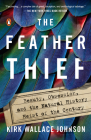
Nonfiction Review: The Feather Thief

I was very excited in August when one of my book groups decided to resume our meetings via Zoom. Our first book chosen for virtual book group this month was The Feather Thief: Beauty, Obsession, and the Natural History Heist of the Century by Kirk Wallace Johnson. I remember hearing rave reviews when this true crime book was first released in 2018, but I probably wouldn't have read it on my own. I would have missed out on a truly fascinating, riveting story. That's one of the many things I love about book groups: they help me to read books I might have otherwise missed.

The very unique crime occurs right in the beginning of the book, in the prologue. The author describes, based on interviews, evidence, and reports, how Edwin Rist, a 20-year-old flautist with London's Royal Academy of Music, made off with a priceless collection of rare birds from the British Museum of Natural History (listen to audio sample below). The crime was so simple as to be almost laughable. He took the train, at night after a concert, to the town where the museum was, walked to the museum, climbed a wall and broke a window, and climbed into the museum, towing a large suitcase on wheels. Once inside, Rist filled his bag with hundreds and hundreds of preserved rare bird specimens, each of which would yield many feathers that fans of Victorian salmon fly-tying (like Rist) would pay a lot of money for. The author then explains how he himself heard about the theft, while fly fishing in New Mexico, from a river guide and became obsessed with the story, leading to a years-long investigation to try to find the missing birds, few of which had been recovered. He also goes back in time to the 1850's to describe how all these rare birds were originally collected. Most of those in the museum had been collected by naturalist Alfred Russel Wallace, a contemporary of Darwin's, on lengthy trips through secluded places in Malaysia and other remote locales, specifically seeking out certain rare species only found in localized regions. The history of women's hats is woven into the story, too, since it created an insatiable appetite for rare, colorful bird feathers. He also tells the reader all about the history of Victorian salmon fly-tying, a hobby that has become an obsession for many modern aficionados, most of whom, ironically, don't even fish! Weaving in history, science, and the crime itself, Johnson tells this intriguing story in a captivating way.

Colorful Wilson's Bird of Paradise (photo from Just Birding website)

This is truly one of those "truth is stranger than fiction" tales, filled with so many fascinating and outrageous facts that I kept interrupting my husband's reading to say, "Hey, listen to this ..." Our book group had plenty to talk about, from the early naturalists' ironic "preservation" of these very rare birds by killing and stuffing them to the outrageous details of the crime itself to the value of the feathers in this unique community. Rist is at the center of this crazy story, and the author includes his own unusual 8-hour interview with him. He also includes plenty of color photos, which we were all eager to pore over to see these colorful birds, expensive salmon flies, and outrageous women's hats. Despite Johnson's best efforts over years to help the museum recover more of the birds, some mysteries remain at the end of the book. It's a well-written and compelling almost-too-crazy-to-believe true crime story that kept us all engrossed. 

308 pages, Viking

Note: This post contains affiliate links. Purchases from these links provide a small commission to me (pennies per purchase), to help offset the time I spend writing for this blog, at no extra cost to you.


Listen to a sample of the audiobook here and/or download it from Audible. The sample is from the prologue, describing the crime in detail--I guarantee you'll be hooked and will want to know more!


You can purchase The Feather Thief from an independent bookstore, either locally or online, here:


Support Independent Bookstores - Visit IndieBound.org


You can also buy through indie bookstores using Bookshop.


Or you can order The Feather Thief from Book Depository, with free shipping worldwide.

Wednesday, December 11, 2019

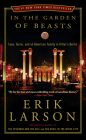
Nonfiction Review: In the Garden of Beasts

Let's see...our copy of In the Garden of Beasts: Love, Terror, and an American Family in Hitler's Berlin by Erik Larson is hardcover, so it's been sitting on our bookcase since I gave it to my husband soon after its release in 2011. He read it right away, told me it was great, and moved it to my side of the TBR bookcase, and...eight years later, I finally read it! He was right. This engrossing true story of the American ambassador (and his family) assigned to Berlin in 1933 is fascinating and chilling.

In 1933, against advice from some in the State Department, the newly-elected President Franklin D. Roosevelt chose William E. Dodd as the new ambassador to Germany. Dodd had no political experience at all; he was a mild-mannered history professor from University of Chicago. His greatest loves were his quiet farm in Virginia, not too far from where he grew up in North Carolina, and his work-in-progress and lifetime goal, a four-volume series called The Rise and Fall of the Old South. He had almost completed the first book when FDR called to ask him to take the position in Berlin. Dodd agreed and moved his family, including his wife, Mattie, and their adult children, Bill and Martha, across the ocean. At first, the family enjoyed the lovely city and its many entertainments. Dodd had lived in Germany as a young man and loved the country and its people. But they soon began to see the disturbing underside of the new Berlin, under Hitler's recent rise to power. There was one man in particular in the State Department who had been warning his colleagues of the terror growing there, but Dodd and most others thought he was exaggerating. After all, the Dodds socialized with members of the Nazi Party and the Third Reich and had them over for dinner. Martha, a young, vibrant journalist, even dated plenty of Reich men, including the first chief of the Gestapo, Rudolf Diels. Little by little, though, they began to see the truth of what was happening in Germany. Dodd's warnings to his colleagues went similarly unheeded, as the family continued to experience an odd mixture of fun and horror. As the year wore on, the horror became more prominent.

As always, Larson's talent for telling a real-life story in a compelling, fiction-like way shines through. He did extensive research, including many primary sources, like the Dodds' letters back and forth to friends, family, and the State Department. Knowing from history what is going to happen in Germany and the terror that is ahead for its citizens (and the world) adds tension and suspense, as the reader wonders how long it will take the poor Dodds to figure things out and what will have to happen for the rest of the world to finally take notice. In this way, it is a chilling book. It is also fascinating, to read about the details of what was going on behind the scenes with the Nazis way back in the early 30's, the conflicts between different factions, the personalities of the highest-ranking Nazis, and the steady progression toward what we know is coming later. As with all of Larson's books I've read, this one kept me rapt. I kept interrupting my husband's reading to share astonishing facts, even though he'd already read the book himself. It's just that kind of a book. We both also highly recommend Larson's Devil in the White City, which oddly combines the World's Fair of 1893 and a serial killer loose at the same time in Chicago in parallel narratives.

What's your favorite Erik Larson book?

365 pages, Crown

Listen to a sample of the audio book, narrated by Stephen Hoye, or download it from Audible. The sample is from the beginning of the book.


You can purchase In the Garden of Beasts from an independent bookstore, either locally or online, here:
Support Independent Bookstores - Visit IndieBound.org

Or you can order In the Garden of Beasts from Book Depository, with free shipping worldwide.

Wednesday, December 05, 2018

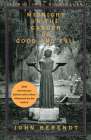
Nonfiction Review: Midnight in the Garden of Good and Evil

I finally found time to read the narrative nonfiction modern classic Midnight in the Garden of Good and Evil by John Berendt, after more than 20 years of sitting on my shelf! It was published in 1994, and my mom lent me her hardcover edition soon after that. Do you think she still wants me to return it? It was worth the wait, a highly entertaining true crime story that focuses on the unique culture and quirky citizens of Savannah, Georgia.

The author explains how he came to live part-time in Savannah for eight years. As a magazine reporter in the 1980's, he decided to take advantage of newly discounted airfares to travel to different places on weekends, and he discovered Savannah during a trip to Charleston. He was so beguiled by the unique place and its people that he rented an apartment there and began to split his time between New York and Savannah. Before long, he felt at home there and so, when a murder took place in his adopted city, he became a part of the story. Interestingly, the murder and the multiple court cases that followed don't take place until halfway through the book. Part 1 is all about the the city and the people of Savannah, setting the stage for the murder mystery/courtroom drama to come. This is more than enough to keep the reader's attention, as Savannah is a character unto itself and seems to be populated by colorful and quirky people. From the antiques dealer/house restorer who lives a wealthy lifestyle and throws lavish parties but is squatting in his current residence and always fighting off bill collectors to the outrageous drag queen named Lady Chablis who randomly chooses the author to chauffeur her around town to the mysterious man who everyone says has a jar of poison at home that could kill the entire city if he ever decides to put it into the water supply, the author meets each one and becomes a part of the crazy-quilt fabric of Savannah. Part 2 is more of a straightforward reporting of the murder and its aftermath, including the three different court cases to try the accused murderer.

This book is pure fun. I know that's a strange thing to say about a story that centers on murder, but this cast of characters is just so outrageous that that they would seem over-the-top in a novel. Similarly, the actual murder and especially the court cases are "this could only happen here" events, like something out of a cheesy movie. But it's true! Berendt has written a very amusing and engaging story, with plenty of wit. When I laughed out loud the hardest, my husband said, "Ah, you must have gotten to the chapter about Chablis!" Truth really is stranger than fiction, and Berendt captures that strangeness perfectly here.

388 pages, Random House
Vintage Paperbacks


Note: This post contains affiliate links. Purchases from these links provide a small commission to me (pennies per purchase), to help offset the time I spend writing for this blog, at no extra cost to you.

Listen to a sample of the audio book here.

Purchase a copy of Midnight in the Garden of Good and Evil at an indie bookstore, either locally or online, here:
Support Independent Bookstores - Visit IndieBound.org

Or order Midnight in the Garden of Good and Evil from Book Depository, with free shipping worldwide.

Thursday, April 12, 2018

Fiction Review: Before We Were Yours

I just finished reading the best-selling novel Before We Were Yours by Lisa Wingate, and I couldn't wait to tell you about it. This truth-is-stranger-than-fiction novel grabbed me by the heart and never let me go. In fact, as soon as I finished it, I looked up more information online about the true story behind the fiction.

Twelve year-old Rill lives with her three younger sisters and two-year old brother on a shanty boat in the Mississippi River with her mother and father, affectionately known to all the kids as Queenie and Briny. They don't have much, but they all love each other very much, and the river provides for them, even during the depths of the Depression. When Queenie goes into labor for her twins too early and Briny has to take her in the johnboat across the river to Memphis to a hospital, Rill is left in charge of her siblings. Everything is going fine until police and other strangers arrive where they are tied to shore and cart all the children off to one of the orphanages of the Tennessee Children's Home Society. Amidst abuse and mistreatment, Rill tries to protect her younger siblings and keep their family together.

In the present day, a young lawyer named Avery Stafford has returned to her family home in South Carolina. Her father, a powerful Senator, is fighting cancer, though that fact is being kept from the public. Avery is there to help care for her father and also to prepare to possibly step into his role if needed, to keep their family's political dynasty alive. While there, Avery meets someone by chance who makes her begin to wonder if her family might have some long-kept secrets. Worried there might be a hidden scandal that could harm the Staffords, she begins to investigate, never guessing where her inquiries will lead.

In the early chapters of this novel, as I read about Rill and her siblings being illegally torn away from their parents and put up for adoption, I thought to myself, "This is just too horrifying - it's not realistic." So imagine my shock when I found out that part of the novel was actually based on the real-life story of Georgia Tann, director of the Tennessee Children's Home Society, who stole children from poor families and sold them for outrageous sums to wealthy parents desperate for children from the 1920's through the 1940's. That makes this novel all the more gripping and stunning. The story pieces together Rill's story bit by bit, with action moving from the past to the present, weaving together disparate threads until they finally come together.

Almost every member of our book group enjoyed this novel, and we had a good discussion about it last night, much of it focused on the real-life story behind the novel. Even though you kind of have the gist of the story from the beginning (it is, after all, based on real history), most of the characters in the novel are fictional, and some of the connections between past and present are only revealed toward the end of the book. Most of us were captivated by the story and characters. Overall, our group rated the novel 7.6 out of 10 (which is high for us) and several people (including me) rated it a 9. This gripping, moving story about a little-known historical horror kept me glued to the book, until I finished it in record time.

352 pages, Ballantine Books

For more information on the real-life scandal the novel is based on, watch this 60 Minutes segment on Georgia Tann, which aired in 1992:


Disclosure: I received this book from the publisher in return for an honest review. My review is my own opinion and is not influenced by my relationship with the publisher or author.

Note: This post contains affiliate links. Purchases from these links provide a small commission to me (pennies per purchase), to help offset the time I spend writing for this blog, at no extra cost to you.
 
Listen to a sample of the audio here (I think this would be great on audio).

Or get this audiobook from Libro.fm and support local bookstores.


You can buy the book through Bookshop.org, where your purchase will support the indie bookstore of your choice (or all indie bookstores)--the convenience of shopping online while still buying local!


Wednesday, April 04, 2018

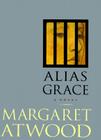
Fiction Review: Alias Grace

For many years, I wanted to read Margaret Atwood's novels (so many books, so little time!). I finally read her best-known book, The Handmaid's Tale, last summer and thoroughly enjoyed it. So, I was glad when my book group recently chose another Atwood novel, Alias Grace, for our March selection. A historical novel, it was completely different from her famous dystopian tale but just as compelling.

Alias Grace is based on the true story of Grace Marks, a young woman in Ontario accused of murder in 1843 and sentenced to life in prison at the tender age of sixteen. Atwood's novel begins during Grace's time in prison, as she walks with guards every day to the warden's house to help his wife and the servants with household duties. Grace's story unfolds slowly over the course of the novel, with some chapters from Grace's first-person perspective, some chapters consisting of letters sent back and forth between various characters, excerpts from real-life news stories printed at the time, and some chapters from the third-person perspective of a young doctor named Simon Jordan. Dr. Jordan specializes in mental health (though it was not known by that name at that time) and hopes to one day revolutionize insane asylums by providing them with the basics of human health (clean water, no open sewage, etc.) He has traveled from the U.S. to Canada to interview Grace, in the hopes of finding a way to help her recover lost memories from the day of the murders. As Simon and Grace talk each day, starting from Grace's earliest memories, her story slowly emerges, from her difficult childhood filled with loss to beginning to work as a servant at the age of thirteen and eventually, to that fateful day of the murders.

This was an excellent novel for a book group, with so much depth and so many different layers to discuss. The biggest question in the novel is whether Grace was guilty and how much of a role she played in the famous double-murder. Her male counterpart was hung for his role in the murders - was Grace forced to help him or was it her idea in the first place? Is she a victim herself, a cold-blooded killer, or insane? These questions underlie the entire narrative, as the reader learns more and more about Grace and her life, while Simon brings her ever-closer to the black hole in her memory. This is not just a murder mystery, though. It is also a full and captivating story about life in the mid-1800's, perfect for anyone who enjoys historical fiction. Atwood brings this 175-year old story to vivid life with her engaging prose and alternating viewpoints, with further depth added by the actual news reports, poems from the time about Grace, and even quilt patterns at the beginning of every section that relate to the story. I thoroughly enjoyed this engrossing novel, as did most of the other members of my book group...though we still could not agree on whether Grace was guilty or innocent!

460 pages, Anchor Books


Disclosure: I received this book as a personal gift. My review is my own opinion.

Note: This post contains affiliate links. Purchases from these links provide a small commission to me (pennies per purchase), to help offset the time I spend writing for this blog, at no extra cost to you.

Order from your favorite indie bookstore:
Support Independent Bookstores - Visit IndieBound.org

Or order Alias Grace from Book Depository, with free shipping worldwide.

Thursday, March 01, 2018

Nonfiction Review: Killers of the Flower Moon

I was excited when my neighborhood book group chose Killers of the Flower Moon: The Osage Murders and the Birth of the FBI by David Grann for February because I'd heard such rave reviews from so many sources. The nonfiction book was a finalist for the National Book Award for Nonfiction, and interviews I'd heard with the author on my favorite book podcasts were enticing. All the hype was right! This gripping true story was fascinating, suspenseful, and also horrifying (as are most true stories of Native Americans and the history of our country). All of my book group members agreed.

The Osage Indian nation had first been removed from their 100 million acres of ancestral land to a small corner of southeastern Kansas by President Thomas Jefferson and then in 1870 squeezed into an arid bit of scrubby land in northeastern Oklahoma. The familiar story has an ironic twist, though - the land the Osage were moved to in Oklahoma contained valuable oil that had not yet been discovered, and thanks to a wily lawyer on their side, each member of the Osage owned "headrights" (transferable only by inheritance) to everything underground, even after the U.S. government further reduced their land into small allotments. This made the Osage the richest people per capita in the world in the 1920's, but it also put a target on their backs.

In 1921, an Osage woman named Anna Brown was murdered and left on the banks of a local creek. That horrifying event started a long string of Osage murders that were - for years - left unsolved and barely investigated by corrupt white local law enforcement. An Osage named Mollie Burkhart was at the center of this tragedy, losing one family member after another, with no answers or justice. Finally, J. Edgar Hoover sent his Bureau of Investigation, which would later become the FBI, to investigate. At that time, these federal investigators had no jurisdiction, carried no weapons, and weren't able to make arrests, but they were outside of local corruption. A former Texas Ranger named Tom White led the investigation, with a ragtag group of undercover agents placed around the area to gather information that would eventually expose the horrifying secrets and conspiracies behind the Osage murders.

Everything about this book - the history and the mystery - was engrossing. Grann made use of thousands of primary sources, including letters, depositions, court documents, and more, to compile this intricate story into a riveting narrative. The twists and turns would be almost unbelievable in fiction, but it's unfortunately all true. I drove my husband crazy reading passages aloud to him while he was trying to read his own book! My book group had a lively discussion last night, ranging from the history of the Osage to the evolution of the FBI to the details of the complex cases uncovered by the author. We were all surprised - though not really, given who writes the history books - that we'd never before heard this shocking story of one of the most vile crimes in American history...and grateful that a talented writer like Grann has now brought it to light. And this important story will be heard by even more people: the movie adaptation is currently in pre-production, being jointly developed by Martin Scorsese and Leonardo DiCaprio.

338 pages (the last 50 pages are lists of sources!), Doubleday


Disclosure: I borrowed this book from the library. My review is my own opinion.

Note: This post contains affiliate links. Purchases from these links provide a small commission to me (pennies per purchase), to help offset the time I spend writing for this blog, at no extra cost to you.

Listen to a sample of the audiobook here and/or download it from Audible. The audio uses multiple narrators.


Or get this audiobook from Libro.fm and support local bookstores (audio sample here, too).


Print and e-book from Amazon.


You can buy the book through Bookshop.org, where your purchase will support the indie bookstore of your choice (or all indie bookstores)--the convenience of shopping online while still buying local!